Thursday, September 08, 2005

The Two Americas

By Marjorie Cohn
t r u t h o u t | Perspective

Saturday 03 September 2005

Last September, a Category 5 hurricane battered the small island of Cuba with 160-mile-per-hour winds. More than 1.5 million Cubans were evacuated to higher ground ahead of the storm. Although the hurricane destroyed 20,000 houses, no one died.

What is Cuban President Fidel Castro's secret? According to Dr. Nelson Valdes, a sociology professor at the University of New Mexico, and specialist in Latin America, "the whole civil defense is embedded in the community to begin with. People know ahead of time where they are to go."

"Cuba's leaders go on TV and take charge," said Valdes. Contrast this with George W. Bush's reaction to Hurricane Katrina. The day after Katrina hit the Gulf Coast, Bush was playing golf. He waited three days to make a TV appearance and five days before visiting the disaster site. In a scathing editorial on Thursday, the New York Times said, "nothing about the president's demeanor yesterday - which seemed casual to the point of carelessness - suggested that he understood the depth of the current crisis."

"Merely sticking people in a stadium is unthinkable" in Cuba, Valdes said. "Shelters all have medical personnel, from the neighborhood. They have family doctors in Cuba, who evacuate together with the neighborhood, and already know, for example, who needs insulin."

They also evacuate animals and veterinarians, TV sets and refrigerators, "so that people aren't reluctant to leave because people might steal their stuff," Valdes observed.

After Hurricane Ivan, the United Nations International Secretariat for Disaster Reduction cited Cuba as a model for hurricane preparation. ISDR director Salvano Briceno said, "The Cuban way could easily be applied to other countries with similar economic conditions and even in countries with greater resources that do not manage to protect their population as well as Cuba does."

Our federal and local governments had more than ample warning that hurricanes, which are growing in intensity thanks to global warming, could destroy New Orleans. Yet, instead of heeding those warnings, Bush set about to prevent states from controlling global warming, weaken FEMA, and cut the Army Corps of Engineers' budget for levee construction in New Orleans by $71.2 million, a 44 percent reduction.

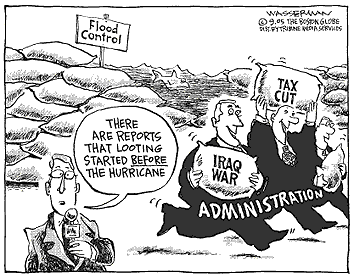
Bush sent nearly half our National Guard troops and high-water Humvees to fight in an unnecessary war in Iraq. Walter Maestri, emergency management chief for Jefferson Paris in New Orleans, noted a year ago, "It appears that the money has been moved in the president's budget to handle homeland security and the war in Iraq."

An Editor and Publisher article Wednesday said the Army Corps of Engineers "never tried to hide the fact that the spending pressures of the war in Iraq, as well as homeland security - coming at the same time as federal tax cuts - was the reason for the strain," which caused a slowdown of work on flood control and sinking levees.

"This storm was much greater than protection we were authorized to provide," said Alfred C. Naomi, a senior project manager in the New Orleans district of the corps.

Unlike in Cuba, where homeland security means keeping the country secure from deadly natural disasters as well as foreign invasions, Bush has failed to keep our people safe. "On a fundamental level," Paul Krugman wrote in yesterday's New York Times, "our current leaders just aren't serious about some of the essential functions of government. They like waging war, but they don't like providing security, rescuing those in need or spending on prevention measures. And they never, ever ask for shared sacrifice."

During the 2004 election campaign, vice presidential candidate John Edwards spoke of "the two Americas." It seems unfathomable how people can shoot at rescue workers. Yet, after the beating of Rodney King aired on televisions across the country, poor, desperate, hungry people in Watts took over their neighborhoods, burning and looting. Their anger, which had seethed below the surface for so long, erupted. That's what's happening now in New Orleans. And we, mostly white, people of privilege, rarely catch a glimpse of this other America.

"I think a lot of it has to do with race and class," said Rev. Calvin O. Butts III, pastor of the Abyssinian Baptist Church in Harlem. "The people affected were largely poor people. Poor, black people."

New Orleans Mayor Ray Nagin reached a breaking point Thursday night. "You mean to tell me that a place where you probably have thousands of people that have died and thousands more that are dying every day, that we can't figure out a way to authorize the resources we need? Come on, man!"

Homeland Security Secretary Michael Chertoff had boasted earlier in the day that FEMA and other federal agencies have done a "magnificent job" under the circumstances.

But, said, Nagin, "They're feeding the people a line of bull, and they are spinning and people are dying. Get off your asses and let's do something!"

When asked about the looting, the mayor said that except for a few "knuckleheads," it is the result of desperate people trying to find food and water to survive.

Nagin blamed the outbreak of violence and crime on drug addicts who have been cut off from their drug supplies, wandering the city, "looking to take the edge off their jones."

When Hurricane Ivan hit Cuba, no curfew was imposed; yet, no looting or violence took place. Everyone was in the same boat.

Fidel Castro, who has compared his government's preparations for Hurricane Ivan to the island's long-standing preparations for an invasion by the United States, said, "We've been preparing for this for 45 years."

On Thursday, Cuba's National Assembly sent a message of solidarity to the victims of Hurricane Katrina. It says the Cuban people have followed closely the news of the hurricane damage in Louisiana, Mississippi and Alabama, and the news has caused pain and sadness. The message notes that the hardest hit are African-Americans, Latino workers, and the poor, who still wait to be rescued and taken to secure places, and who have suffered the most fatalities and homelessness. The message concludes by saying that the entire world must feel this tragedy as its own.

Thursday, September 01, 2005

Friday, August 05, 2005

NCAA bans Indian mascots, nicknames from postseason events

INDIANAPOLIS — The NCAA banned the use of American Indian mascots by sports teams during its postseason tournaments, but will not prohibit them otherwise.

The NCAA's executive committee decided this week the organization did not have the authority to bar Indian mascots by individual schools, committee chairman Walter Harrison said Friday.

Nicknames or mascots deemed "hostile or abusive'' would not be allowed by teams on their uniforms or other clothing beginning with any NCAA tournament after Feb. 1, said Harrison, the University of Hartford's president.

"What each institution decides to do is really its own business'' outside NCAA championship events, he said.

At least 18 schools have mascots the NCAA would deem "hostile or abusive,'' including Florida State's Seminole and Illinois' Illini. The full list of schools was not immediately released.

Not all schools with Indian-related nicknames would be on that list. NCAA officials said some schools using the Warrior nickname do not use Indian symbols and would not be affected.

The NCAA two years ago recommended that schools determine for themselves whether the Indian depictions were offensive.

Among the schools to change nicknames in recent years over such concerns were St. John's (from Redmen to Red Storm) and Marquette (from Warriors to Golden Eagles).

The NCAA plans to ban schools using Indian nicknames from hosting postseason events. Harrison said schools with such mascots that have already been selected as tournament sites would be asked to cover any offensive logos.

Such logos also would be prohibited at postseason games on cheerleader and band uniforms starting in 2008.

CNN Suspends Novak After He Walks Off Set


NEW YORK -- CNN suspended commentator Robert Novak indefinitely after he swore and walked off the set Thursday during a debate with Democratic operative James Carville.

The live exchange during CNN's "Inside Politics" came during a discussion of Florida's Senate campaign. CNN correspondent Ed Henry noted when it was over that he had been about to ask Novak about his role in the investigation of the leak of a CIA officer's identity.

A CNN spokeswoman, Edie Emery, called Novak's behavior "inexcusable and unacceptable." Novak apologized to CNN, and CNN was apologizing to viewers, she said.

"We've asked Mr. Novak to take some time off," she said.

A telephone message at Novak's office was not immediately returned Thursday.

Carville and Novak were both trying to speak while they were handicapping the GOP candidacy of Katherine Harris. Novak said the opposition of the Republican establishment in Florida might not be fatal for her.

"Let me just finish, James, please," Novak continued. "I know you hate to hear me, but you have to."

Carville, addressing the camera, said: "He's got to show these right wingers that he's got a backbone, you know. It's why the Wall Street Journal editorial page is watching you. Show 'em that you're tough."

"Well, I think that's bull---- and I hate that," Novak replied. "Just let it go."

As moderator Henry stepped in to ask Carville a question, Novak walked off the set.

Only two weeks ago, CNN executives defended their decision to keep Novak on the air during the ongoing probe into the revelation of CIA officer Valerie Plame's identity. In a July 2003 newspaper column, Novak identified Plame, the wife of administration critic and former U.S. ambassador Joseph Wilson, as a CIA operative.

Wilson has said the leak of his wife's name was an attempt by the administration to discredit him. Two other reporters connected to the case openly fought the revelation of their sources, and Judith Miller of The New York Times has been jailed for refusing to cooperate with prosecutors.

Novak has repeatedly refused to comment about his role in the federal investigation.

After Novak walked off on Thursday, Henry said that Novak had been told before the segment that he was going to be asked on air about the CIA case.

"I'm hoping that we will be able to ask him about that in the future," Henry said.

Novak has been a longtime contributor to CNN, taking the conservative point of view during the just-canceled "Crossfire" show.

Thursday, July 28, 2005

FLASH: Alvarez in final season at Wisconsin

Barry Alvarez will hand the Wisconsin coaching job to Bret Bielema after this season and focus on running the school's athletics department.

The Milwaukee Journal Sentinel first reported the coaching move, which sources confirmed to ESPN.com's Pat Forde.

Alvarez is in his 16th season as the school's football coach and has also been serving as the athletic director since last year.

Bielema, who is 35, is in his second season as the team's defensive coordinator. He previously was the co-defensive coordinator at Kansas State.

Alvarez is 108-70-4 at Wisconsin with three Rose Bowl victories and seven other bowl appearances.

Wednesday, July 27, 2005

Some pull 'Doonesbury' over Rove moniker

KANSAS CITY, Missouri (AP) -- It may be President Bush's nickname for key political adviser Karl Rove, but some editors don't think it belongs in their newspapers.

About a dozen papers objected to Tuesday's and Wednesday's "Doonesbury" comic strips, and some either pulled or edited them.

The strips refer to Rove, the White House deputy chief of staff, as "Turd Blossom."

Lee Salem, editor at Kansas City-based Universal Press Syndicate, which distributes the strip to 1,400 papers, said the complaints from 10 to 12 newspapers weren't unexpected. As opposed to other times when editors have objected to Doonesbury content, the syndicate did not send out replacement strips.

"Given the coverage of Karl Rove, we thought it was appropriate, especially given the history of the strip," Salem said.

Doonesbury's creator, Garry Trudeau, has infuriated some editors over the years with his language, images and political themes. An e-mail to Trudeau wasn't immediately returned Tuesday.

Salem said that since newspapers don't have to notify the syndicate when they choose to remove a strip, it's impossible to know how many papers ran Tuesday's comic.

In the strip, Bush and an aide are lamenting the problems the administration has had over allegations that Rove leaked the name of a CIA officer to reporters.

Bush says, "Karl's sure been earnin' his nickname lately."

The unnamed aide says, "Boy Genius? I'm not so sure sir ..."

Bush then says, "Hey Turd Blossom! Get in here."

The term is said to be one of several nicknames Bush uses for Rove, one of his closest allies and who is widely credited for Bush's election in 2000 and re-election in 2004. The mainstream U.S. media have rarely mentioned the nickname, but it has gained traction in the international press and on the Internet.

Among those with concerns was the Providence (Rhode Island) Journal, whose editors removed the offensive word from the strip's final panel.

"I didn't think (taking out the word) hurt it," Executive Editor Joel Rawson said. "I would prefer to run the strip and if we can edit it, that's fine."

Other papers, such as The Kansas City Star, removed the strip entirely, replacing it with an older one.

"We thought it was in bad taste and probably unclear to a lot of people why we would be using the term," said Steve Shirk, the Star's managing editor/news.

Whitehouse says won't hand over some Roberts papers

WASHINGTON - The White House said on Tuesday it will refuse to hand over to the Senate some documents related to Supreme Court nominee John Roberts' government legal work, a sign of a possible battle ahead with Senate Democrats.

Senate Democrats, who have demanded access to relevant information as the confirmation process gets under way, expressed disappointment and said the documents being held back could hold information necessary to evaluate Roberts.

"A blanket statement that entire groups of documents are off limits is both premature and ill advised," said a letter to Bush from eight Democrats on the Senate Judiciary Committee.

White House spokesman Scott McClellan said the administration would make public 62,000-65,000 pages of documents concerning Roberts' work during the administration of Republican President Ronald Reagan.

But he said the Justice Department will withhold internal memos generated from 1989 to 1993, during Roberts' work as deputy solicitor general during the presidency of George Bush, father of the current president and a fellow Republican.

Roberts wrote a legal brief during this period on the 1973 Roe v. Wade decision legalizing a woman's right to abortion, in which he said "we continue to believe that Roe was wrongly decided and should be overruled."

Senate Judiciary Chairman Arlen Specter, a Pennsylvania Republican, said the White House had decided to hold back some documents and that Ed Gillespie, President Bush's point man on the nomination, informed him of it on Monday.

Sen. Patrick Leahy of Vermont, ranking Democrat on the Judiciary Committee, which will hold confirmation hearings, said he hoped the White House move was not intended to hinder the Senate's consideration of Roberts' nomination.

"There will be additional documents we ask for," he said.

Massachusetts Democratic Sen. Edward Kennedy said in his 42 years on the Judiciary committee, "we have received many internal Justice Department documents as least at sensitive as these, even for confirmation proceedings that don't come close to the importance of a Supreme Court appointment."

Specter said it was premature to talk about documents but noted, "I'd have to be an ostrich not to be concerned."

LINE OF ATTACK?

McClellan accused Democrats of demanding documents as part of a line of attack prepared even before Roberts' nomination.

The White House cited an agreement in 2002 by seven former solicitor generals in declaring the internal memos protected by attorney-client privilege. The solicitor general argues cases on behalf of the U.S. government before the Supreme Court.

Releasing the documents, McClellan said, "would have a chilling effect on the ability of the solicitor generals to receive candid, honest, and thorough advice from their attorneys during the decision-making process."

He said he did not know how many documents might be in question.

Roberts spent a fifth day visiting with lawmakers before his confirmation hearings.

Partisan bickering also broke out over their timing.

Specter said he and Leahy, despite numerous talks, have yet to agree on when to start. Some Democrats favor mid-September; some Republicans are pushing to have committee members end their summer recess early and start in late August.

Specter, who has scheduling power as chairman, said he wants the full Senate to vote on Roberts no later than Sept. 29, so he could be seated before the Supreme Court begins its new term on Oct. 3.

McClellan said all documents from Roberts' 1981-1982 tenure as special assistant to the attorney general during the Reagan administration would be sent to the Senate Judiciary Committee.

They were also being made available to the media in a special reading room outside Washington later on Tuesday.

The administration also agreed to work with the Reagan presidential library in California to release documents relating to Roberts' work in the White House counsel's office from 1982 to 1986.

Roberts, a federal appeals court judge for the past two years, has received a generally upbeat reception on Capitol Hill since being nominated last Tuesday to replace retiring Justice Sandra Day O'Connor.

(Additional reporting by Tom Ferraro)

Democrats Watch in Horror as Union Base Falls Apart

by David Usborne

The American labor movement was on the brink of civil war last night as two major unions, including the Teamsters, prepared to leave the country's main labor congress, the AFL-CIO, amid bitter recriminations over its leadership and failure to reverse a steep membership decline.

Hostilities broke into the open on Sunday when four large unions announced that they were boycotting the annual convention of the AFL-CIO, which got under way in Chicago yesterday. It then emerged that two of the four were likely also to withdraw from the alliance altogether.

The two departing unions, the International Brotherhood of Teamsters and the Service Employees International Union, have 1.4 and 1.8 million members respectively. Their revolt represents a body blow - both in morale terms and financially - to the AFL-CIO and was being described as the worst rift in the labor movement since 1930.

It risks further undermining union strength in the United States which has been in decline for decades, eroded by dwindling membership rolls, the effects of automation, the relentless rush to improve productivity, and the ramifications of globalization and increased world competition.

The AFL, the American Federation of Labor, and the CIO, the Congress of Industrial Organizations, broke away from one another in the 1930s. However, they merged again in 1955 and this year's convention was meant to be a celebration of that 50-year marriage. In all that time, the AFL-CIO, roughly equivalent to Britain's TUC, has been the voice of organized labor in the country.

But while roughly one in three workers in the private sector belonged to a union in America half a century ago, only 8 per cent do so today. The relentlessness of that decline and the political environment now makes union power still less credible and has given rise to the tensions of today.

A splintering of the labor movement also bodes ill for the Democratic Party, which for generations has depended on labor leaders to galvanize voters as well as raise funds for candidates for the White House and Congress. Last year, almost a quarter of all the votes cast in the presidential race came from union households, a majority of which supported the Democrat, John Kerry.

Part of the battle is being fought over John Sweeney, leader of the AFL-CIO for 10 years, who is expected to win re-election this week. Activists have been fighting to have him removed, arguing he has failed to re-energize the movement.

Seven unions now belong to an ad hoc grouping - the "Change to Win Coalition" - opposed to Mr Sweeney's re-election. All may end up breaking ranks. They are demanding new leadership and more funds to allow individual unions to merge and launch new membership drives.

"The AFL-CIO, to its credit, has listened to us. But in the end, they have not heard us. The language of reform has been adopted, but not the substance ... We have reached a point where our differences have become unresolvable," said Anna Burger, the chairman of Change to Win.

Backers of Mr Sweeney, 71, have come close to branding their departing brethren as traitors to the cause. "Today is a tragic day because those that left the house of labor ... are weakening our house and shame on them," growled Leo Gerard, president of the United Steelworkers, which will remain in the fold.

Others contended that the dissidents, far from helping, were playing into the hands of those who would like to see the movement grow weaker still. "I think the only one who wins from this is George Bush and his minions who are trying to weaken labor unions," said Gerald McEntee, president of the American Federation of State, County and Municipal Employees.

Wednesday, July 20, 2005

AFSCME files unfair labor practices complaint against U


Unions representing 3,500 workers at the University of Minnesota have filed an unfair labor practices complaint against the school, saying administrators are trying to control bargaining committee membership.

Contracts for AFSCME units representing clerical, technical and health care workers expired in June. The union wanted the clerical and health care units to bargain a new contract together. The university refused.

Representatives of some of the AFSCME units are sitting in on each other's negotiation sessions, and asked that the observers receive union leave benefits that allow them to accrue vacation and sick leave benefits while they are there. The school refused.

"For us, that's the university trying to control who is on the negotiating committee," said Jennifer Lovaasen, communications director for the union. She said some members can't afford to attend the sessions without the benefits.

"No one is ever denied an opportunity to come to the bargaining session," said Mark Rotenberg, the university's general counsel. "But we do not have to provide special benefits to someone who wants to come to the table and is not in the bargaining unit."

A hearing on the union complaint will be scheduled soon.

In 2003, members of the clerical unit were on strike for two weeks. It was the first strike at the university in almost 60 years.

Big Ten Changes its Bowl Lineup for 2006: Sun & Music City Out, Insight & Champs Sports In

The Big Ten shuffled its postseason bowl game lineup, adding some popular fan destinations in new football agreements announced Tuesday.

The league added the Champs Sports Bowl in Orlando and the Insight Bowl in Tempe, Ariz., in a four-year agreement starting in 2006. The conference will drop the Sun Bowl in El Paso, Texas, and the Music City Bowl in Nashville after this season. The status of the Motor City Bowl in Detroit is still up in the air.

The Big Ten also extended its agreement with the Capital One (Orlando), Outback (Tampa, Fla.) and Alamo (San Antonio) bowls for four more years. It already had signed an eight-year extension with the Rose Bowl through the 2013 season.

"With a heavy concentration of Big Ten alumni in the states of Arizona, California, Florida and Texas, this bowl lineup is a natural fit for the conference and should provide some great matchups on the field," Big Ten Commissioner Jim Delany said.

Held the final week of December, the Champs Sports Bowl will have the fourth choice of Big Ten schools for two years and the fifth choice the other two years, rotating with the Alamo Bowl. The Big Ten's opponent for the Champs Sports Bowl has not been finalized yet.

The Insight Bowl will move to Sun Devil Stadium in Tempe, Ariz., in December 2006 and will pit the Big Ten against the Big 12.

The Big Ten currently has six tie-ins outside the Rose Bowl. A league spokesperson said the conference is exploring either an extension with the Motor City Bowl or adding a different bowl game.

Tuesday, July 05, 2005

Twins vs. Tigers - June 23, 2005

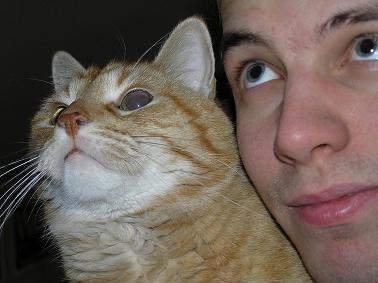
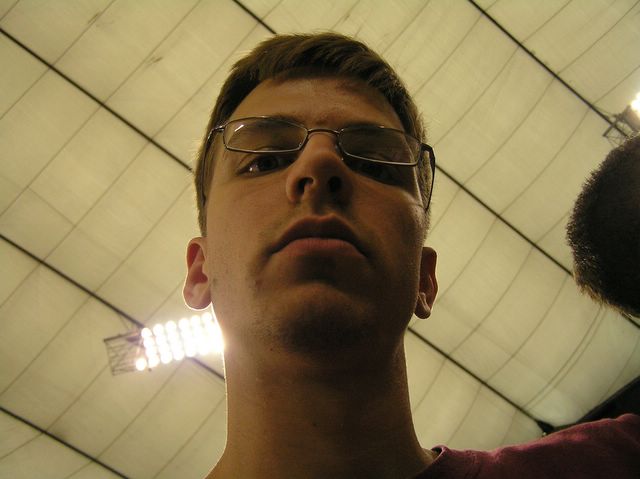
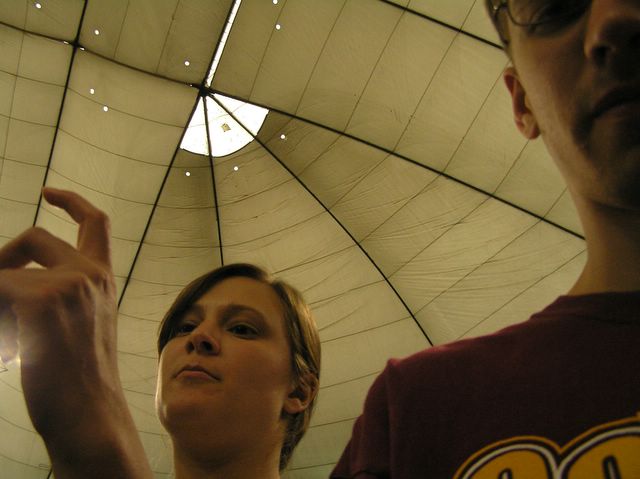
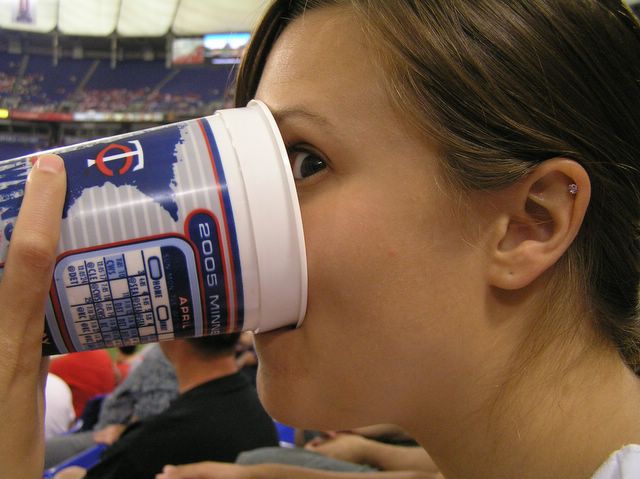
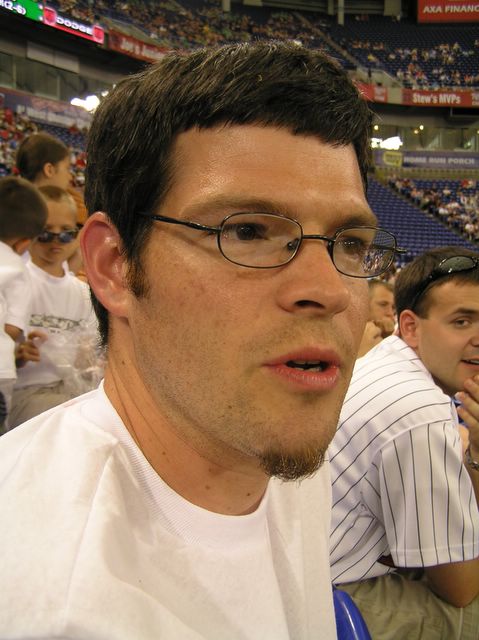
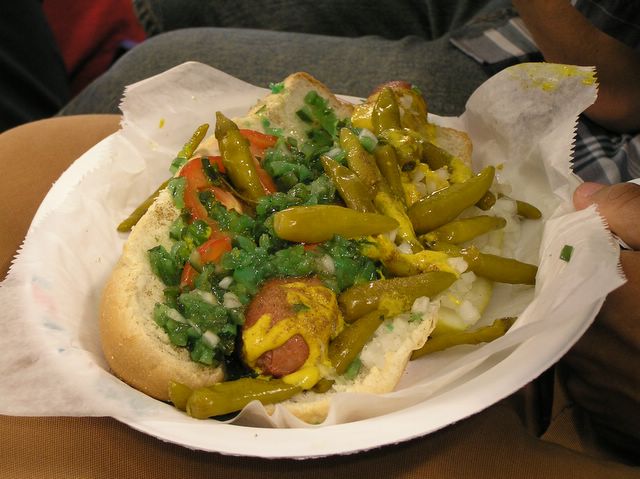
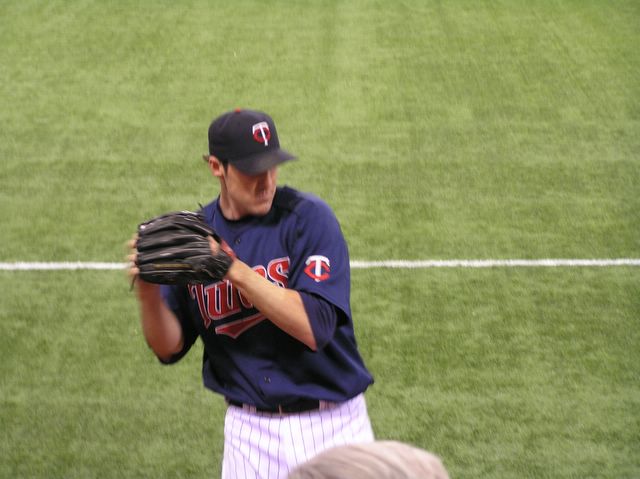
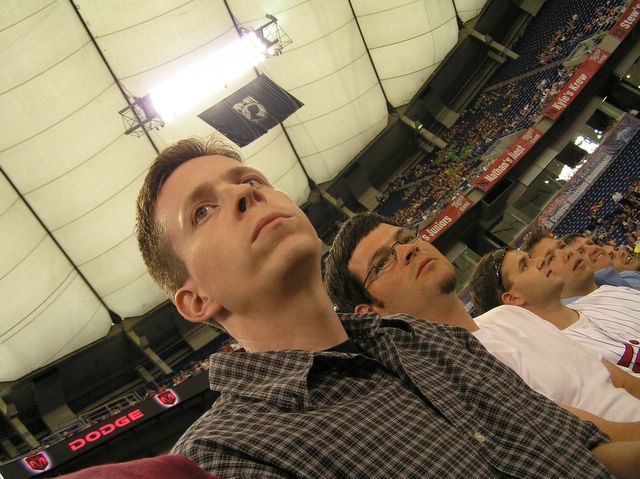
Just some pictures I took at the Twins game a couple weeks ago. Nothing special in them, mostly just shots of my so-called 'friends.' And by so-called friends I mean enemies! ;-)

How do I use this thing?

The friendly metrodome swastika

A classic piece of work with the camera

Squinty and her pop (Holy Eyeball!)

Mark looking intelligent

I can't believe Marcus actually ate this

Joe Nathan warming up

Brad & Mark trying to watch the game

Tuesday, June 28, 2005

US suspected of keeping secret prisoners on warships: UN official

The UN has learned of "very, very serious" allegations that the United States is secretly detaining terrorism suspects in various locations around the world, notably aboard prison ships, the UN's special rapporteur on terrorism said.

While the accusations were rumours, rapporteur Manfred Nowak said the situation was sufficiently serious to merit an official inquiry.

"There are very, very serious accusations that the United States is maintaining secret camps, notably on ships," the Austrian UN official told AFP, adding that the vessels were believed to be in the Indian Ocean region.

"They are only rumours, but they appear sufficiently well-based to merit an official inquiry," he added.

Last Thursday Nowak and three other UN human rights experts said they were opening an inquiry into the US detention camp at Guantanamo Bay, Cuba, where Washington has been holding more than 500 people without trial, and into other such locations.

The United States has neither refused nor granted requests by Nowak's group to visit Guantanamo.

"We have accepted, upon the request of the State Department and Pentagon, to limit our investigation for now to Guantanamo, but even in accepting this we have not had a positive response" to the request for a visit, Nowak said.

He said that if the "investigation into Guantanamo leads us to other things, we will follow them. We will bring up all these matters to the US government and expect Washington to say officially where these camps are."

The use of prison ships would allow investigators to interrogate people secretly and in international waters out of the reach of US law, British security expert Francis Tusa said.

"This opens the door to very tough interrogations on key prisoners before it even has been revealed that they have been captured," said Tusa, an editor for the British magazine Jane's Intelligence Review.

Nowak said the prison ships would not be "floating Guantanamos" since "they are much smaller, holding less than a dozen detainees."

Tusa said the Americans may also be using their island base of Diego Garcia in the Indian Ocean as a site for prisoners.

Some 520 people suspected of terrorism are currently being held without trial at Guantanamo and others are in camps the United States has refused to acknowledge, the human rights organization Amnesty International has said.

The United States has said that prisoners considered foreign combattants in its "war on terrorism" are not covered by the Geneva Conventions.